

The Billion Dollar Question
Can the Art from the Artist Be Separated? Should It Be?

Until September 7, new and current subscribers can take advantage of a 50% discount forever on annual subscriptions. Thank you for your paid support. All paid support goes toward my high-school-age daughter’s future higher education.
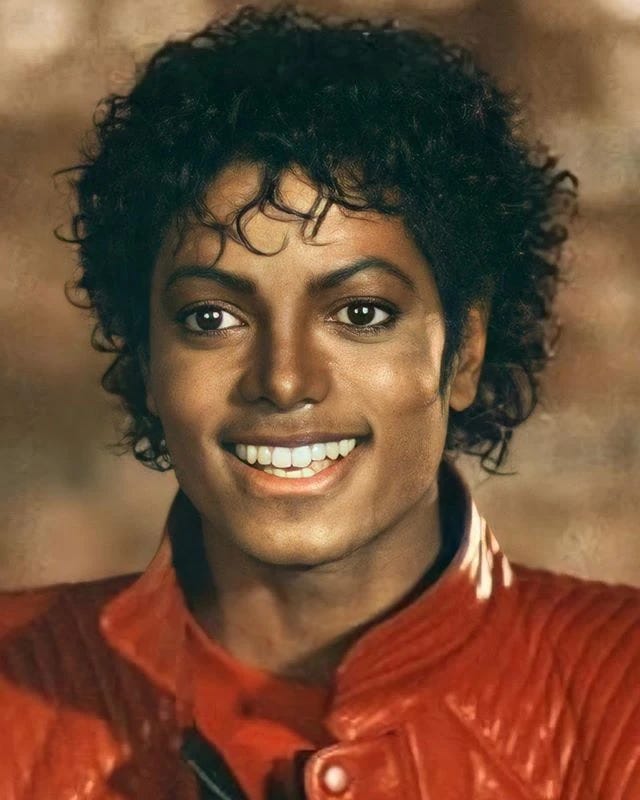
Michael just made a billion dollars at the combined domestic and international box offices. That amount makes Michael the largest earning musical biopic in film history.
Last month in my essay “Hagiography versus Biography,” I argued not only did the Jackson estate present a deified version of Michael Jackson to the silver screen, but it once again brought the art versus the artist debate to sociocultural consciousness. The estate has accomplished its goal in rehabilitating Michael Jackson. Gen Z and Gen Alpha have fallen in love with his music and him.
Many now are defending Jackson from child molestation allegations, joining the elder Moonwalker stans. My Gen Alpha daughter is one of them.
When my daughter gave me the false talking point about the FBI conducting a 10-13 year investigation on Jackson that found nothing, I told her that was a lie; the FBI only assisted local law enforcement in the 1993 and 2003 cases. When the FBI did follow leads, many people did not want to cooperate with the agents.
She asked me what that said about her if she enjoyed his music while he may have been a child molester. I explained to her separating the art from the artist. I told her I know it is difficult, but Michael Jackson is not the only artist in history to have committed terrible actions against others nor the only artist to act on their pedophilia.
She is a visual artist herself, and I mentioned the pedophiles Paul Gauguin and Graham Ovenden who are respected in art history and by some artists themselves. No surprise. That didn’t sway her.
Still a high school student, my daughter has not yet reached the stage where she can grapple with separating the art from the artist. I grapple with it myself.
Why wouldn’t we? Child molestation and child rape are sickening and grotesque. Childhood sexual abuse leaves the worst trauma and emotional scars on survivors and their families. Even in 2026, preferential pedophile predators are still not fully understood, and children are still not fully protected from them or supported when they come forward with their abuse.
I was still teaching my first-year liberal studies seminar on Anne Sexton, who sexually abused her eldest daughter, at DePaul University when Leaving Neverland dropped on HBO. My students and I all watched Dan Reed’s documentary outside of class. I told them I did not believe Michael Jackson would ever be cancelled. He is too ingrained in the worldwide culture.
I also told them we could not ignore his biography and the childhood sexual abuse allegations made against him. Scholars, critics and biographers do their best work when they take a critical, open and nuanced eye to their subject and their work.
No one is perfect. No one is an infallible god or goddess. To ignore the how, what, where and when those artists have fallen shaves off the complexity of their life and art.
But what does that say about us if we continue to enjoy a heinous person’s brilliant art?

The two best essays I have read on encountering great art made by cruel people and pedophiles were written by Claire Dederer for The Paris Review and London-based art and cultural property lawyer Mark Stephens for The Art Newspaper. They present questions and arguments that we all should consider.
In “What Do We Do with the Art of Monstrous men?”, Dederer addressed men like Richard Wagner, Woody Allen, Bill Cosby and Roman Polanski. Despite their evil actions, she found herself compelled to still take in, study, and feel enraptured by their art. Our morality and emotions she writes are what make us question if we are “monstrous” as well when we appreciate and enjoy their art.
Stephens takes the question a step further. Titled “What Should We Do with Great Art by Paedophiles?”, Stephens acknowledged Gauguin, Ovenden, Jerry Lee Lewis (remember he married his 13-year-old cousin), and sculptor Eric Gill before he dove into the British court case of Ovenden.
For his case, a British district judge named Elizabeth Roscoe ordered the eradication of Overton’s work. Stephens argues the judge misinterpreted the 1978 Protection of Children Act that she applied to Ovenden’s paintings. That act according to Stephens only covers photographs. The decency of Ovenden’s paintings would fall under 1959’s Obscene Publications Act and investigate if Ovenden’s paintings are indecent and would lead the viewing audience to commit pedophilic acts themselves.
Using the British Obscene Publications Act for Michael Jackson, here are the disturbing questions that arise like the living dead from his Thriller video. Would Michael Jackson and his musical art lead us as the listener to commit pedophilic acts ourselves?
If his work does not influence us to commit this despicable crime, what does that say about us if we continue to enjoy listening to his music? All five siblings from the Cascio family are the latest accusers. At the same time, I still cannot deny that Jackson’s music was and remains breathtaking and resonant.
Fans who have seen the movie more than once were reported as dancing in the aisles to the playlist propaganda film. What does it say about a person dancing in joy to a film about a man who with each new allegation looks more guilty of having committed childhood sexual abuse during his lifetime?
Does it say anything about our own moral compass and ethics though? New Criticism believes a literary artist’s work itself should be closely read, studied, and criticized; the literary artist’s biography is not considered into a work’s analysis and creation.
But for several literary and other artists, their life does inspire their work. Yet the work they birth has its own life. Once an artist of any genre releases their work for public consumption, how people interpret and consume it is out of an artist’s control.
Some believe Jackson and his music should be destroyed like Ovenden’s paintings and legacy. The questions we must ask are these. Would destruction and cancellation of Jackson and his songs solve the controversies and his alleged childhood sexual abuse? Would ignoring the allegations and Jackson’s own biography that was filled with trauma and genius repair his broken and soured legacy?
Stephens expounds on this in regards to Ovenden:
Art tells a story; it denotes its time and place and is therefore utterly irreplaceable. Is it ever acceptable to delete history? At a time when cultural property pertaining to national identity is under threat in many parts of the world, is it acceptable to delete part of ours, irrespective of how heinous the artist’s personal behaviour may have been?
Prodigious and diverse artistic talent is often married to personal disturbance, yet possessors of such talent continue to have their work widely celebrated, despite public knowledge of their personal wrong-doings, delinquencies and crimes. In addition to Lewis and Gill, the works of the film-maker Roman Polanski, the authors J.M. Barrie and Lewis Carroll and the composer Benjamin Britten, to name but a few, fail to be marred by rumours about their behaviour.
Others, such as the musician Ian Watkins and the artist Rolf Harris—both found guilty of, and jailed for, sexual offences against children—have rightly been hung, drawn and quartered by the court of public opinion. It is no longer socially acceptable to celebrate their work, irrespective of its quality, but even so, it has not been destroyed.
Judge Roscoe’s decision also risks flouting Article 10 of the European Convention of Human Rights, which protects valid exercises of artistic freedom. Any restriction must be strictly necessary in a democratic society in order to protect against crime or injury to morality. Can it really be said that Ovenden’s work incites others to paedophilia?
Ovenden’s art has not changed. It is the same art that graced the Piccadilly and Leicester galleries. The Metropolitan Museum of Art and the McCrory Foundation in New York have both shown his work, and it has also been seen on the BBC, on ITV and on Channel 4. In short, his work has received international recognition and dissemination. Famously, Princess Diana even commissioned a piece depicting a child’s bare bottom. The only difference is that now the artist is a known paedophile.
What about the victims? The law is set up to protect those who could be harmed by Ovenden’s work—namely, the subjects of it. If any of the models in the pictures object to the works being publicly available, then, without question, they should not be. However, destroying the paintings not only destroys part of an artistic canon: it deletes the evidence that abuse took place. Survivors need witnesses; the telling of an experience is a crucial part of the healing process. But when the works are gone, the victims will be permanently deprived of them.
Museums in possession of Ovenden’s work should preserve it for the survivors and until such a time that the public wants to review it. When it comes to displaying the works publicly in the future, they should rely on a defence provided for in the Protection of Children Act—that there is a “legitimate reason”.
The importance of Ovenden’s work and his position within the cultural history of British art provide ample reason for possession and display of his paintings. His personal behaviour should not infect how his art is viewed. Perhaps it is not possible to divorce the art from the artist, as Judge Roscoe has demonstrated in her decisions, but this makes the works more culturally significant. Crucially, the works tell a story and should not be erased as if they never existed, because it is through history that we learn.
Jackson and his music are not going anywhere. Neither are his interviews. Throughout his adult life, he often said that children were his artistic and life inspiration. For me, songs like “Give In To Me,” “The Way You Make Me Feel” and “In the Closet” now carry ominous meanings.

One hundred and fifty years from now, people will still be listening to Michael Jackson. The only factor that will change is that the Jackson family will be gone along with the estate’s executor John Branca. New generations of listeners, scholars and biographers will have entered the picture.
Only then could a full and granular biography and analysis of Michael Jackson be researched and written like Heather Clark’s astonishing literary biography of Sylvia Plath Red Comet: The Short Life and Blazing Art of Sylvia Plath. Not only does Jackson and his music deserve an honest and in-depth take but so do his victims.
Well… way back in my personal timeline. I was at the Adam’s Mark Hotel in Memphis having breakfast before my cousin’s wedding. The restaurant has a wall of glass that looks over a man made pond. As we sat there, a very tall well built man wearing what I call secret service earpiece came trotting through the restaurant and out the door toward the pond. Naturally this really caught my attention since my BA and MA are in Criminal Justice. The man did not walk out toward the three people in the midpoint of the edge of the pond feeding bread treats to the ducks that lived there. As a native of Tupelo, MS I was quite surprised when it took me so long to recognize Lisa Marie and her two children as those who were being protected - I wouldn’t even get up from my table. This was during the time she was married to Michael. They were not staying at the same hotel. Where he was staying in Memphis for the opening of the pyramid was a madhouse. And yet, I got to sit and watch a quite famous mom of two just spending time with them, her every gesture just like my own mom’s countless times at a restaurant in Tupelo that had a pond when I was a young child.
Over the weekend I never saw any of them again. But the picture image I have left is priceless.
But the burden of having multiple men with earpieces surrounding you and your very small toddlers 24/7? Those men were not in my line of sight, but I’m very certain exactly where they were standing-keeping watch. Y’all, there’s something so very wrong with this country- it’s not new, it’s been here so very long. Like I said, I’m a native of Tupelo MS. The phenomenon of E is mesmerizing- even to Michael.
And I’ll leave it to your imaginations to wonder just how not fun Busloads of tourists 10-12 buses at a time from every foreign country driving through town in ‘78 when E died. I have friends who are to this very day completely enchanted with a man who died while we were in high school. The number of tribute artists are infinite. And yet- not so much for Michael. At least not yet, maybe as time passes.
And yet, I own Lisa Marie’s albums, from the moment they were out for sale. I have never understood that one choice to marry Michael. It befuddles me, such a waste of time for her own music. My mother’s maid of honor can dial a number anywhere in the world at any time of day and her call will be answered by yet another E impersonator. It’s been like that for decades. I just don’t get it. When her husband died very early in the year? I couldn’t get through- a woman who has been in my life since before I was actually born, her firstborn just 3 weeks younger than me.
I realized some time ago that some people need to believe that someone is larger than life itself and that they are lucky to know them by their name.
Me? I’m just grateful that my wife stands by my side and has done so for more than 32 years. Up,down, sideways- no matter. Grateful and very very lucky.